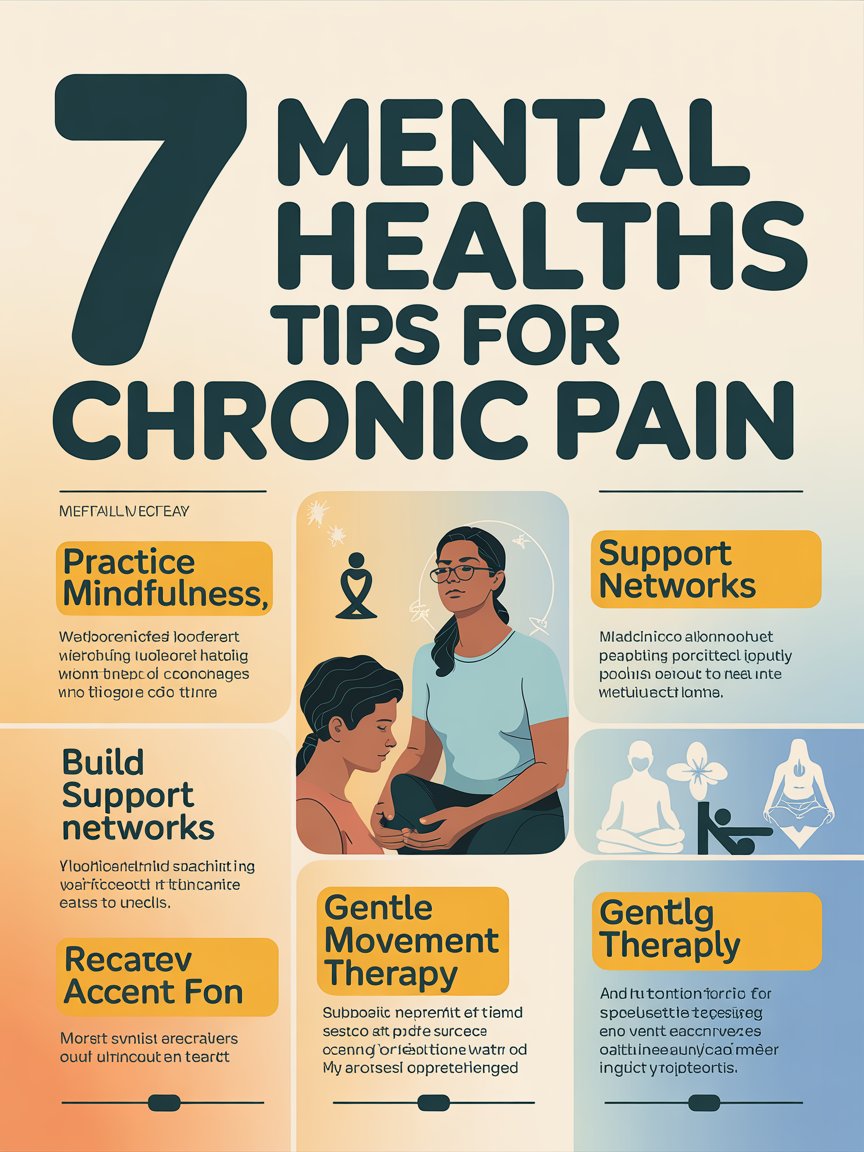
7 Mental Health Tips for Chronic Pain
Living with chronic pain can take a toll not only on your body but also on your mental and emotional well-being. Ongoing discomfort can lead to stress, anxiety, frustration, and even depression if not properly managed. Taking care of your mental health is just as important as managing physical symptoms.
By building supportive habits and coping strategies, you can improve your emotional resilience and overall quality of life. Below are seven mental health tips to help you navigate chronic pain more effectively.
1. Practice Mindfulness Daily
Stay Present
Focusing on the present moment can help reduce worry and stress.
Manage Pain Perception
Mindfulness can make pain feel more manageable over time.
2. Talk About Your Feelings
Express Emotions
Sharing your thoughts with a trusted person can relieve emotional pressure.
Build Support
Open communication helps you feel less alone in your journey.
3. Set Realistic Goals
Avoid Overwhelm
Break tasks into smaller, achievable steps.
Celebrate Progress
Recognizing small wins can boost motivation and confidence.
4. Maintain a Routine
Create Stability
A daily routine provides structure and reduces uncertainty.
Balance Activity and Rest
It helps you manage energy levels more effectively.
5. Engage in Enjoyable Activities
Find Joy in Small Things
Hobbies like reading, music, or crafts can improve mood.
Reduce Stress
Enjoyable activities provide a mental break from pain.
6. Practice Self-Compassion
Be Kind to Yourself
Avoid negative self-talk and unrealistic expectations.
Accept Your Limits
Understanding your body’s needs helps reduce frustration.
7. Seek Professional Support
Get Expert Guidance
Therapists or counselors can help you develop coping strategies.
Improve Emotional Health
Professional support can be especially helpful during difficult times.
Conclusion
Managing mental health is a crucial part of living with chronic pain. By practicing mindfulness, building support systems, and maintaining a balanced routine, you can improve your emotional well-being and resilience.
Remember, you are not alone. With the right strategies and support, it is possible to live a more balanced, fulfilling life despite chronic pain.

Leave a Reply