Blog

  • 9 Sleep Tips for Chronic Pain

    9 Sleep Tips for Chronic Pain

    9 Sleep Tips for Chronic Pain

    Introduction

    Getting restful sleep while living with Chronic Pain can be difficult. Discomfort, stiffness, and stress often interfere with falling and staying asleep. However, with the right habits and environment, you can improve your sleep quality and wake up feeling more refreshed.


    1. Stick to a Consistent Sleep Schedule

    Going to bed and waking up at the same time every day helps regulate your internal clock. Consistency trains your body to recognize when it’s time to rest, making it easier to fall asleep.


    2. Create a Relaxing Bedtime Routine

    Engage in calming activities before bed, such as reading, gentle stretching, or deep breathing. This helps signal your body that it’s time to wind down.


    3. Optimize Your Sleep Environment

    Keep your bedroom quiet, dark, and cool. Use comfortable bedding and supportive pillows to reduce pressure on painful areas and improve overall comfort.


    4. Use Heat or Cold Therapy

    Applying a heating pad or cold pack to sore areas before bed can help reduce pain and inflammation, making it easier to relax and fall asleep.


    5. Limit Screen Time Before Bed

    Avoid using phones, tablets, or TVs at least 30–60 minutes before bedtime. Blue light can disrupt your sleep cycle and make it harder to fall asleep.


    6. Practice Relaxation Techniques

    Techniques like deep breathing, meditation, or progressive muscle relaxation can calm your mind and body, reducing stress and tension.


    7. Choose the Right Sleep Position

    Experiment with different sleeping positions to find what reduces pain. For example, placing a pillow between your knees or under your neck can help support proper alignment.


    8. Stay Active During the Day

    Gentle movement, such as walking or stretching, can improve sleep quality. Staying active helps regulate your energy levels and promotes better rest at night.


    9. Avoid Heavy Meals and Caffeine Late

    Eating large meals or consuming caffeine close to bedtime can interfere with sleep. Opt for light snacks if needed and avoid stimulants in the evening.


    Tips for Better Results

    Small, consistent changes can lead to significant improvements. Focus on building a routine that supports relaxation and comfort every night.


    When Sleep Still Feels Difficult

    If sleep problems persist, consider speaking with a healthcare professional. They can help identify underlying issues and recommend appropriate treatments.


    Long-Term Benefits

    Improving sleep can reduce pain sensitivity, boost mood, and increase daily energy levels. Over time, better rest supports overall health and well-being.


    Conclusion

    Sleep is essential for managing chronic pain. By incorporating these nine tips into your routine, you can create a more comfortable sleep environment and improve your chances of getting restful, restorative sleep each night.


  • 7 Relaxation Techniques for Better Sleep

    7 Relaxation Techniques for Better Sleep

    7 Relaxation Techniques for Better Sleep

    Introduction

    Falling asleep can be difficult when your body feels tense or your mind won’t slow down—especially for those living with Chronic Pain or Fibromyalgia. Relaxation techniques can help calm your nervous system, ease physical discomfort, and prepare your body for restful sleep.


    1. Deep Breathing

    A simple yet powerful way to relax your body.
    Focus on slow, deep breaths—inhaling through your nose and exhaling through your mouth. This helps lower stress levels, reduce heart rate, and signal your body that it’s time to rest.


    2. Progressive Muscle Relaxation

    This technique involves tensing and then relaxing different muscle groups.
    Start from your toes and work your way up to your head, gently tightening each muscle group for a few seconds before releasing. It helps reduce physical tension and increase body awareness.


    3. Guided Meditation

    Listening to a calming voice or visualization can help quiet your mind.
    Guided meditation shifts your focus away from stress and pain, making it easier to drift into sleep.


    4. Body Scan Technique

    A mindful practice that brings awareness to your body.
    Lie comfortably and slowly focus on each part of your body, noticing tension and consciously relaxing it. This technique promotes deep relaxation and reduces discomfort.


    5. Gentle Stretching

    Light stretching before bed can ease muscle tightness.
    Focus on slow, soothing movements that release tension without overstretching. This prepares your body for a more comfortable sleep.


    6. Aromatherapy

    Using calming scents can enhance relaxation.
    Essential oils like lavender or chamomile can create a peaceful environment and help signal your brain that it’s time to wind down.


    7. Visualization

    Imagining a peaceful scene can calm your mind.
    Picture yourself in a relaxing place, such as a beach or a quiet garden. This mental escape can reduce stress and make it easier to fall asleep.


    Tips for Better Results

    Create a quiet, comfortable sleep environment and practice these techniques consistently. Combining two or more methods can enhance their effectiveness.


    Building a Night Routine

    Incorporate these techniques into your nightly routine to train your body to relax at the same time each day. Even 10–15 minutes can make a difference.


    Listening to Your Body

    Not every technique works the same for everyone. Try different methods and focus on what feels most calming and effective for you.


    Long-Term Benefits

    Regular relaxation practices can improve sleep quality, reduce stress, and lower pain sensitivity over time.

  • 8 Bedtime Routines for Pain Relief

    8 Bedtime Routines for Pain Relief

    8 Bedtime Routines for Pain Relief

    Introduction

    Ending your day with the right habits can make a big difference when living with Chronic Pain or Fibromyalgia. A calming bedtime routine helps your body relax, reduces muscle tension, and prepares your mind for restful sleep. Small, consistent actions each night can lead to noticeable pain relief over time.


    1. Gentle Evening Stretching

    Light stretching before bed helps loosen tight muscles and reduce stiffness. Focus on slow, controlled movements like neck stretches, shoulder rolls, or a simple forward bend to release tension built up during the day.


    2. Warm Bath or Shower

    Taking a warm bath or shower can soothe aching muscles and calm the nervous system. The warmth helps improve circulation and relaxes the body, making it easier to fall asleep.


    3. Deep Breathing Exercises

    Practicing deep breathing can reduce stress and relax your body. Try slow inhalations through your nose and gentle exhalations through your mouth to calm your mind and ease physical tension.


    4. Limit Screen Time

    Avoid phones, tablets, and TVs at least 30–60 minutes before bed. The blue light from screens can interfere with your sleep cycle and make it harder to relax.


    5. Use Heat Therapy

    Applying a heating pad or warm compress to sore areas can help reduce pain and stiffness. This is especially helpful for the back, shoulders, or joints before sleep.


    6. Create a Comfortable Sleep Setup

    Use supportive pillows and a mattress that reduces pressure on sensitive areas. Adjust your sleeping position to keep your spine aligned and minimize discomfort throughout the night.


    7. Practice Mindfulness or Meditation

    Calming your mind is just as important as relaxing your body. Mindfulness or meditation can reduce stress and help shift your focus away from pain, promoting a more peaceful sleep.


    8. Stick to a Consistent Sleep Schedule

    Going to bed at the same time each night helps regulate your internal clock. A consistent routine trains your body to wind down naturally, improving sleep quality over time.


    Tips for Better Results

    Keep your bedroom quiet, dark, and cool. Avoid heavy meals or caffeine late in the evening, and give your body time to unwind before lying down.


    Building a Routine That Works

    You don’t need to do everything at once. Choose 2–3 habits that feel most helpful and gradually build your routine. Consistency is key to seeing long-term benefits.


    Listening to Your Body

    Pain levels can vary from day to day, so adjust your routine accordingly. On more difficult days, focus on extra relaxation and comfort.


    Long-Term Benefits

    A consistent bedtime routine can improve sleep quality, reduce pain intensity, and support overall well-being. Over time, it helps your body recover more effectively each night.

  • 10 Natural Ways to Sleep Better with Fibromyalgia

    10 Natural Ways to Sleep Better with Fibromyalgia

    10 Natural Ways to Sleep Better with Fibromyalgia

    Introduction

    Getting quality sleep can be a major challenge for people living with Fibromyalgia. Pain, stiffness, and an overactive nervous system often make it difficult to fall asleep or stay asleep. Fortunately, natural strategies can help improve sleep patterns and support deeper, more restorative rest.


    1. Create a Consistent Sleep Schedule

    Going to bed and waking up at the same time every day helps regulate your body’s internal clock. Consistency trains your brain to recognize when it’s time to rest, making it easier to fall asleep naturally.


    2. Build a Relaxing Night Routine

    Establish calming habits before bed, such as reading, gentle stretching, or deep breathing. Avoid stimulating activities like screen time or intense conversations that may keep your mind active.


    3. Keep Your Sleep Environment Comfortable

    Your bedroom should be quiet, dark, and cool. Use supportive pillows and a comfortable mattress to reduce pressure on sensitive areas and minimize discomfort during sleep.


    4. Practice Gentle Evening Stretching

    Light stretching before bed can help release muscle tension and reduce stiffness. Focus on slow, soothing movements to prepare your body for rest.


    5. Limit Caffeine and Sugar

    Avoid caffeine and sugary foods in the evening, as they can interfere with your ability to fall asleep. Opt for calming alternatives like herbal tea instead.


    6. Try Warm Baths or Showers

    A warm bath before bed can relax muscles and ease pain. The drop in body temperature afterward can also signal your body that it’s time to sleep.


    7. Use Relaxation Techniques

    Techniques such as meditation, deep breathing, or progressive muscle relaxation can calm the nervous system and reduce stress, making it easier to drift off.


    8. Stay Active During the Day

    Gentle daytime activities like walking or yoga can improve sleep quality at night. Regular movement helps regulate energy levels and supports a healthier sleep cycle.


    9. Avoid Long Daytime Naps

    While short naps can be helpful, long or irregular naps during the day may disrupt nighttime sleep. Try to keep naps brief and earlier in the day.


    10. Listen to Your Body

    Fibromyalgia symptoms can vary, so adjust your routine based on how you feel. On more painful days, focus extra on relaxation and comfort to support better sleep.


    Tips for Better Sleep Habits

    Keep electronic devices away from your bed, maintain a consistent bedtime routine, and avoid heavy meals late at night. Small changes can make a big difference over time.


    Long-Term Benefits

    Improving sleep can reduce pain sensitivity, boost energy, and enhance mood. Over time, better rest supports overall health and makes fibromyalgia symptoms more manageable.


    Staying Consistent

    Natural sleep strategies work best when practiced regularly. Be patient with the process and give your body time to adjust to new habits.

  • 10 Safe Workouts for Fibromyalgia

    10 Safe Workouts for Fibromyalgia

    10 Safe Workouts for Fibromyalgia

    Introduction

    Living with Fibromyalgia can make exercise feel difficult, especially during flare-ups. However, the right types of workouts can actually reduce pain, improve flexibility, and boost energy levels. The key is choosing safe, low-impact activities that support your body without causing strain.

    Why Safe Workouts Matter

    With fibromyalgia, overexertion can worsen symptoms. Gentle, controlled exercises help maintain mobility, strengthen muscles, and improve overall well-being while minimizing the risk of increased pain or fatigue.


    1. Walking

    One of the easiest and most accessible workouts.
    Walking at a comfortable pace helps improve circulation, reduce stiffness, and boost mood. Start with short durations and increase gradually.


    2. Gentle Yoga

    A calming practice that combines stretching and breathing.
    Yoga helps relax muscles, improve flexibility, and reduce stress. Focus on slow, restorative poses rather than intense flows.


    3. Tai Chi

    A slow, flowing form of movement.
    Tai Chi emphasizes balance, coordination, and deep breathing, making it ideal for reducing pain and improving relaxation.


    4. Pilates

    A low-impact strength-building workout.
    Pilates focuses on core stability, posture, and controlled movements, helping support the body without excessive strain.


    5. Swimming

    A full-body workout with minimal joint stress.
    Water supports your body, making movement easier and less painful. Swimming can improve strength and flexibility while reducing pressure on muscles and joints.


    6. Water Aerobics

    A gentle alternative to traditional aerobics.
    Performed in a pool, this workout combines movement and resistance while keeping impact low. It’s great for improving endurance and flexibility.


    7. Stretching Routines

    Simple stretches can reduce stiffness and improve mobility.
    Daily stretching helps keep muscles flexible and prevents tightness, especially in commonly affected areas like the neck, back, and hips.


    8. Stationary Cycling

    A low-impact cardio option.
    Using a stationary bike allows you to improve cardiovascular health and leg strength without stressing your joints.


    9. Resistance Band Exercises

    A safe way to build strength gradually.
    Resistance bands provide light tension, helping strengthen muscles without heavy weights. They are easy to adjust based on your comfort level.


    10. Chair Exercises

    Perfect for low-energy or flare-up days.
    Chair-based workouts allow you to stay active while seated, reducing strain and providing gentle movement for the entire body.


    Tips for Exercising Safely

    Always start slow and listen to your body. Warm up before exercising and cool down afterward. Avoid pushing through pain, and take breaks when needed to prevent flare-ups.


    Creating a Balanced Routine

    Mix different types of workouts throughout the week to avoid overusing specific muscles. For example, alternate between walking, stretching, and strength exercises.


    Managing Flare-Ups

    During flare-ups, reduce intensity or switch to gentler options like stretching or chair exercises. Rest is important, but light movement can still help reduce stiffness.


    Long-Term Benefits

    Regular, safe exercise can improve strength, flexibility, and energy levels. It can also reduce the frequency and severity of fibromyalgia symptoms over time.

  • 9 Ways Movement Helps Reduce Pain

    9 Ways Movement Helps Reduce Pain

    9 Ways Movement Helps Reduce Pain

    Introduction

    Living with Chronic Pain can make it tempting to avoid activity. However, gentle and consistent movement is one of the most effective ways to reduce discomfort and improve daily function. Even small amounts of physical activity can create meaningful changes in how your body feels and responds to pain.

    Why Movement Matters

    The body is designed to move. When you stay active, you support circulation, muscle health, and joint function. For individuals dealing with chronic pain, movement can break the cycle of stiffness, tension, and discomfort.


    1. Increases Blood Flow

    Movement improves circulation, allowing oxygen and nutrients to reach muscles and tissues. This helps reduce inflammation and supports the body’s natural healing processes.


    2. Reduces Muscle Stiffness

    Gentle activity keeps muscles flexible and prevents them from becoming tight. This makes everyday movements smoother and less painful.


    3. Releases Natural Painkillers

    Physical activity stimulates the release of endorphins—chemicals in the brain that act as natural pain relievers. These also help improve mood and reduce stress.


    4. Improves Joint Mobility

    Regular movement keeps joints lubricated and flexible. This reduces stiffness and helps maintain a healthy range of motion.


    5. Strengthens Supporting Muscles

    Stronger muscles provide better support for joints and the spine. This reduces strain on the body and helps prevent further pain or injury.


    6. Breaks the Pain Cycle

    Avoiding movement can lead to more stiffness and weakness, which increases pain. Gentle activity interrupts this cycle and helps restore normal function.


    7. Reduces Stress and Tension

    Stress often makes pain feel worse. Movement, especially relaxing activities like walking or stretching, helps calm the nervous system and release built-up tension.


    8. Improves Sleep Quality

    Regular physical activity can help regulate sleep patterns. Better sleep allows the body to recover and can reduce pain sensitivity over time.


    9. Boosts Confidence and Independence

    Staying active helps you feel more in control of your body. This can improve confidence, making it easier to manage daily tasks and maintain independence.


    Tips for Getting Started

    Start small and choose activities that feel comfortable, such as walking, stretching, or gentle yoga. Gradually increase your activity level as your body adapts. Always listen to your body and avoid pushing into pain.


    Building a Sustainable Routine

    Consistency is key. Aim for short, regular sessions rather than long, intense workouts. Even 10–15 minutes of movement each day can provide lasting benefits.


    When to Take It Slow

    On days when pain is more intense, reduce the duration or intensity of your activity. Light stretching or simple movements can still help without overexertion.


    Long-Term Benefits

    Over time, regular movement can reduce pain intensity, improve flexibility, and enhance overall quality of life. It also supports both physical and mental well-being.

  • 7 Pilates Moves for Fibromyalgia Beginners

    7 Pilates Moves for Fibromyalgia Beginners

    7 Pilates Moves for Fibromyalgia Beginners

    Introduction

    Starting an exercise routine with Fibromyalgia can feel intimidating, especially when pain and fatigue are unpredictable. Pilates offers a gentle, controlled way to build strength, improve flexibility, and support overall body awareness—making it ideal for beginners managing fibromyalgia.

    Why Pilates Helps with Fibromyalgia

    Pilates focuses on slow, precise movements and breathing techniques. This helps strengthen muscles without overexertion, improves posture, and reduces strain on joints. It’s especially beneficial for easing stiffness and promoting relaxation.


    1. Pelvic Tilt

    A foundational move for core stability.
    Lie on your back with knees bent and feet flat. Gently tilt your pelvis to press your lower back into the floor, then release. This movement strengthens the core and reduces lower back tension.


    2. Knee Folds

    A gentle way to activate abdominal muscles.
    From a lying position, slowly lift one foot off the floor, keeping your knee bent, then lower it back down. Alternate legs while keeping your movements controlled and smooth.


    3. Arm Openings

    This exercise improves upper-body mobility.
    Lie on your side with arms extended in front of you. Slowly open your top arm across your body, following it with your eyes, then return to the starting position. This helps reduce stiffness in the chest and shoulders.


    4. Seated Spine Stretch

    A simple stretch for spinal flexibility.
    Sit tall with your legs extended and gently reach forward, rounding your spine slightly. Move slowly and avoid forcing the stretch. This helps release tension in the back.


    5. Heel Slides

    A beginner-friendly lower-body exercise.
    Lie on your back and slowly slide one heel toward your body, bending your knee, then slide it back out. Alternate legs to improve hip and knee mobility.


    6. Chest Lift

    A mild core-strengthening movement.
    Lie on your back with knees bent and hands behind your head. Gently lift your head and shoulders off the floor, then lower back down. Keep the movement small and controlled to avoid strain.


    7. Leg Drops

    A controlled movement for core stability.
    Lie on your back with knees bent and lifted. Slowly lower one foot toward the floor, then bring it back up. Alternate legs while maintaining a steady pace.


    Tips for Practicing Safely

    Start slowly and focus on quality over quantity. Keep your breathing steady and avoid holding your breath. If any movement causes pain, stop and modify it to suit your comfort level.

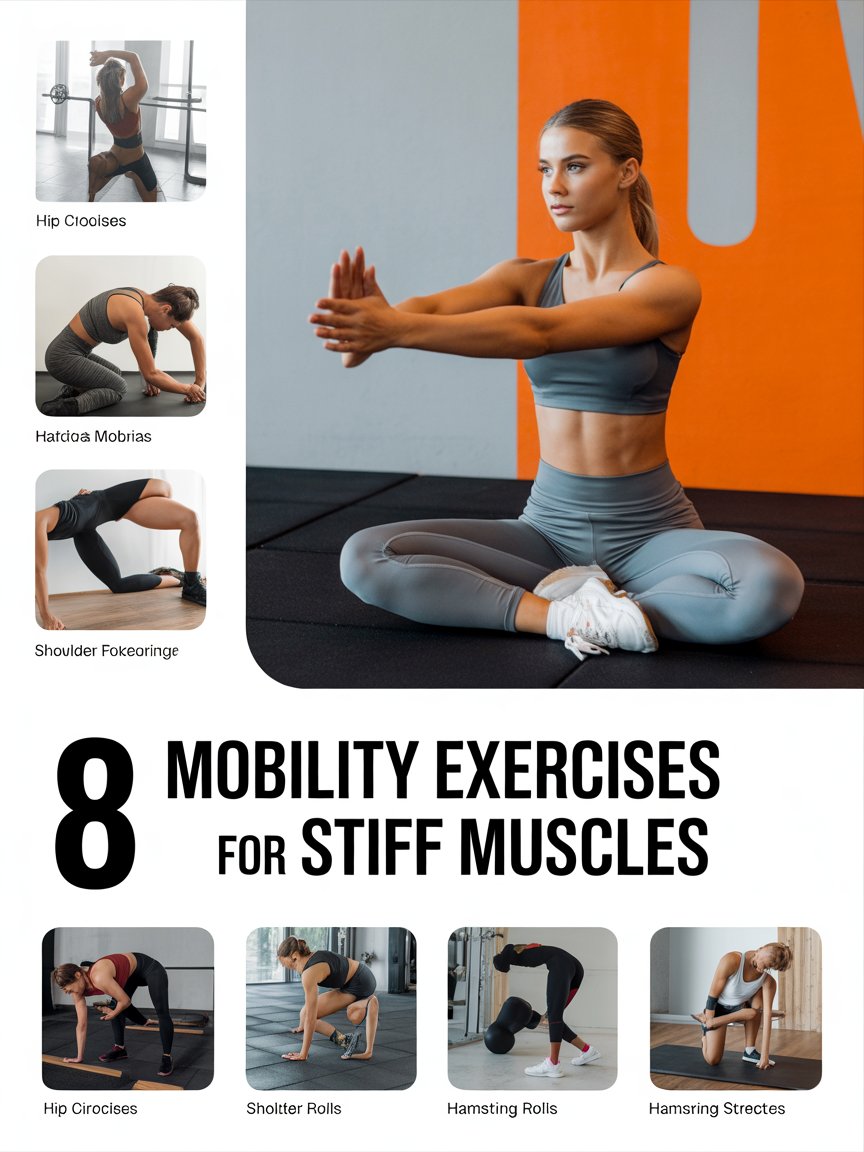
  • 8 Mobility Exercises for Stiff Muscles

    8 Mobility Exercises for Stiff Muscles

    8 Mobility Exercises for Stiff Muscles

    Introduction

    Muscle stiffness can make everyday movements feel restricted and uncomfortable. Whether it’s caused by inactivity, stress, or conditions like Chronic Pain, improving mobility is key to restoring ease of movement. Gentle mobility exercises help loosen tight areas, increase flexibility, and support overall physical function.

    Why Mobility Exercises Matter

    Mobility exercises focus on controlled, active movements that improve joint range and muscle flexibility. Unlike static stretching, they encourage your body to move through natural patterns, making them especially helpful for reducing stiffness and preventing injury.


    1. Neck Mobility Rolls

    This exercise helps release tension in the neck and upper shoulders.
    Sit or stand upright and slowly roll your head in a circular motion. Perform small, controlled circles and switch directions. Avoid dropping your head too far back to prevent strain.


    2. Shoulder Circles

    A simple way to improve upper-body mobility.
    Lift your shoulders upward, then roll them backward and down in a smooth motion. Repeat several times, then switch directions. This helps relieve tightness from poor posture or long periods of sitting.


    3. Arm Swings

    Great for loosening the shoulders and chest.
    Stand comfortably and gently swing your arms forward and backward. Keep the movement relaxed and rhythmic to increase blood flow and reduce stiffness.


    4. Cat-Cow Movement

    A dynamic stretch for the spine.
    On your hands and knees, alternate between arching your back upward and lowering it while lifting your head. Move slowly with your breath to improve spinal mobility and ease back tension.


    5. Hip Circles

    This exercise improves flexibility in the hips and lower body.
    Stand with your hands on your hips and gently rotate your hips in a circular motion. Keep the circles controlled and switch directions after a few repetitions.


    6. Seated Knee Lifts

    A gentle movement for hip and lower-body mobility.
    Sit in a chair and slowly lift one knee toward your chest, then lower it back down. Alternate legs while maintaining good posture.


    7. Ankle Rolls

    Essential for improving lower-leg mobility.
    Lift one foot slightly off the ground and rotate your ankle in circles. Switch directions and repeat with the other foot. This helps reduce stiffness and supports balance.


    8. Torso Twists

    A controlled movement for spinal flexibility.
    Stand or sit upright and gently twist your upper body from side to side. Keep the movement slow and avoid forcing the twist to maintain comfort.


    Tips for Safe Mobility Work

    Always move slowly and stay within a comfortable range of motion. Avoid bouncing or jerking movements, and focus on smooth, controlled actions. Breathing steadily during each exercise helps relax your muscles.


    Building a Daily Routine

    You don’t need a long session to see benefits. Practicing these exercises for 10–15 minutes daily can significantly improve flexibility and reduce stiffness over time.


    Listening to Your Body

    If a movement causes sharp pain, stop immediately. Mobility work should feel gentle and relieving, not intense or uncomfortable.


    Long-Term Benefits

    Regular mobility exercises can improve posture, increase joint flexibility, and make daily activities easier. Over time, they help your body move more freely and comfortably.


    Staying Consistent

    Consistency is the key to success. Even on busy days, a few minutes of movement can help maintain your progress and prevent stiffness from returning.

  • 10 Walking Benefits for Chronic Pain

    10 Walking Benefits for Chronic Pain

    10 Walking Benefits for Chronic Pain

    Introduction

    Living with Chronic Pain can make exercise feel challenging, but walking is one of the simplest and most effective ways to stay active. It requires no special equipment, can be done almost anywhere, and is gentle enough for most people. With consistency, walking can play a powerful role in reducing discomfort and improving quality of life.


    1. Improves Circulation

    Walking helps increase blood flow throughout the body. Better circulation delivers oxygen and nutrients to muscles and tissues, which can reduce stiffness and promote healing.


    2. Reduces Muscle Stiffness

    Gentle movement helps loosen tight muscles. Regular walking prevents the body from becoming too rigid, making daily movements easier and less painful.


    3. Boosts Natural Pain Relief

    Walking encourages the release of endorphins—your body’s natural painkillers. These chemicals help reduce pain perception and create a sense of well-being.


    4. Enhances Joint Mobility

    Low-impact movement keeps joints flexible without putting excessive strain on them. This is especially helpful for individuals dealing with long-term discomfort or stiffness.


    5. Supports Better Sleep

    Regular walking can improve sleep quality. Better rest allows the body to recover more effectively, which may help reduce pain levels over time.


    6. Reduces Stress and Anxiety

    Chronic pain often comes with emotional stress. Walking, especially outdoors, has a calming effect on the mind and can help lower stress hormones.


    7. Increases Energy Levels

    Although it may seem counterintuitive, gentle exercise like walking can boost energy. It improves overall endurance and helps combat fatigue associated with chronic pain.


    8. Aids in Weight Management

    Maintaining a healthy weight reduces pressure on joints and muscles. Walking regularly supports weight management in a safe and sustainable way.


    9. Improves Posture and Balance

    Walking strengthens core and stabilizing muscles, which helps improve posture and balance. This reduces the risk of falls and further injury.


    10. Encourages Consistency and Routine

    One of the greatest benefits of walking is its simplicity. Because it’s easy to maintain, it helps build a consistent routine—an essential factor in managing chronic pain effectively.


    Tips for Walking Safely

    Start with short sessions, even 5–10 minutes, and gradually increase your time. Wear comfortable shoes, walk on even surfaces, and listen to your body. If pain increases, slow down or take a break.


    Making Walking Enjoyable

    Choose a pleasant environment, listen to calming music, or walk with a friend. Turning walking into an enjoyable activity makes it easier to stay consistent.


    Long-Term Impact

    Over time, regular walking can lead to improved mobility, reduced pain intensity, and better overall health. Small, consistent steps truly add up.


    Conclusion

    Walking is a gentle yet powerful tool for managing chronic pain. By incorporating it into your daily routine, you can improve both your physical and mental well-being. Start slow, stay consistent, and let each step bring you closer to a more comfortable and active life.

  • 6 Chair Exercises for Fibromyalgia

    6 Chair Exercises for Fibromyalgia

    6 Chair Exercises for Fibromyalgia

    Introduction

    Living with Fibromyalgia often makes traditional workouts feel overwhelming. On days when standing or high-energy movement is difficult, chair exercises offer a gentle and effective way to stay active. These movements can help reduce stiffness, improve circulation, and support overall comfort—all while seated.

    Why Chair Exercises Help

    Chair exercises are low-impact, easy to modify, and accessible for most fitness levels. They allow you to move your body without placing extra stress on joints or muscles. For individuals with fibromyalgia, this means you can stay consistent with movement even during low-energy or flare-up days.


    1. Seated Neck Stretch

    This simple stretch helps relieve tension in the neck and shoulders.
    Sit upright and gently tilt your head toward one shoulder. Hold for 10–15 seconds, then switch sides. Move slowly and avoid forcing the stretch to prevent discomfort.


    2. Seated Shoulder Rolls

    A great way to release upper-body stiffness.
    Sit comfortably and roll your shoulders backward in slow circles, then forward. Repeat several times while breathing deeply to relax tight muscles.


    3. Seated Leg Extensions

    This exercise strengthens the legs without strain.
    Sit with your feet flat on the floor, then slowly extend one leg straight out. Hold for a few seconds before lowering it back down. Alternate between legs to build strength gradually.


    4. Seated Marching

    A gentle cardio movement that boosts circulation.
    While seated, lift one knee at a time as if you’re marching in place. Keep the movement slow and controlled. This exercise can help improve blood flow and reduce stiffness in the lower body.


    5. Seated Torso Twist

    This movement improves flexibility in the spine.
    Sit tall and gently twist your upper body to one side, holding the chair for support if needed. Hold briefly, then return to center and repeat on the other side. Avoid sudden or deep twisting.


    6. Seated Arm Raises

    A light upper-body strengthening exercise.
    Raise your arms slowly to shoulder height or overhead, then lower them back down. You can perform this with or without light weights, depending on your comfort level.


    Tips for Safe Practice

    Always start with a few deep breaths to relax your body. Move slowly and avoid pushing into pain. Keep your posture upright and supported by the chair to prevent strain.


    Creating a Daily Routine

    You can combine 3–4 of these exercises into a short routine lasting 10–15 minutes. Even a few minutes of movement each day can help reduce stiffness and improve energy levels over time.


    Listening to Your Body

    Fibromyalgia symptoms can vary daily, so it’s important to adjust your exercises accordingly. If you feel increased pain or fatigue, reduce the intensity or take a break.


    Benefits Over Time

    Regular chair exercises can improve flexibility, support muscle strength, and reduce discomfort. They also promote a sense of control and well-being, which is essential when managing chronic conditions.


    Staying Consistent

    Consistency is more important than intensity. Try to incorporate these exercises into your daily routine, even on days when your energy is low.