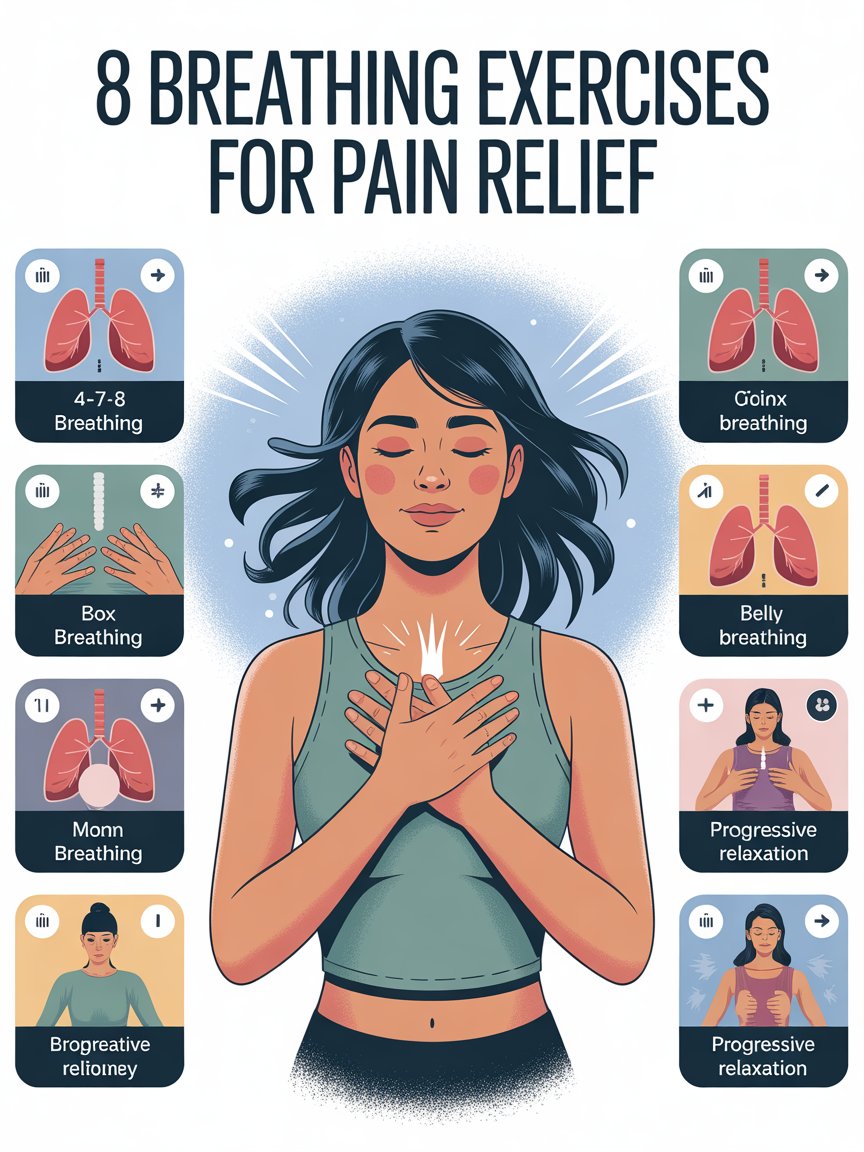
8 Breathing Exercises for Pain Relief
Chronic pain can place constant stress on the body, tightening muscles and increasing tension. One of the simplest and most effective ways to ease pain naturally is through breathing exercises. Controlled breathing helps calm the nervous system, reduce stress hormones, and promote relaxation.
By practicing breathing techniques regularly, you can lower pain sensitivity and feel more in control of your body. Below are eight breathing exercises that may help relieve pain.
1. Deep Belly Breathing
How to Do It
Place one hand on your chest and the other on your stomach. Breathe deeply through your nose so your stomach rises.
Benefits
This technique relaxes the body and reduces muscle tension.
2. 4-7-8 Breathing
How to Do It
Inhale for 4 seconds, hold for 7 seconds, and exhale for 8 seconds.
Benefits
It calms the nervous system and helps reduce stress-related pain.
3. Box Breathing
How to Do It
Inhale for 4 seconds, hold for 4 seconds, exhale for 4 seconds, and hold again for 4 seconds.
Benefits
This method promotes balance and relaxation.
4. Alternate Nostril Breathing
How to Do It
Close one nostril while inhaling, then switch nostrils when exhaling.
Benefits
It helps calm the mind and reduce tension.
5. Pursed-Lip Breathing
How to Do It
Inhale through your nose and exhale slowly through pursed lips.
Benefits
It slows breathing and helps relax the body.
6. Resonant Breathing
How to Do It
Breathe in and out slowly, aiming for about 5–6 breaths per minute.
Benefits
It improves heart rate balance and reduces stress.
7. Guided Breathing
How to Do It
Follow a guided audio or app that directs your breathing rhythm.
Benefits
It makes it easier to stay focused and relaxed.
8. Visualization Breathing
How to Do It
Imagine breathing in calm energy and breathing out pain or tension.
Benefits
This combines mental relaxation with physical calmness.
Conclusion
Breathing exercises are a powerful, natural way to manage pain. They help calm the mind, relax the body, and reduce tension that can worsen discomfort.
With regular practice, these techniques can become a simple yet effective tool to support pain relief and improve overall well-being.

Leave a Reply