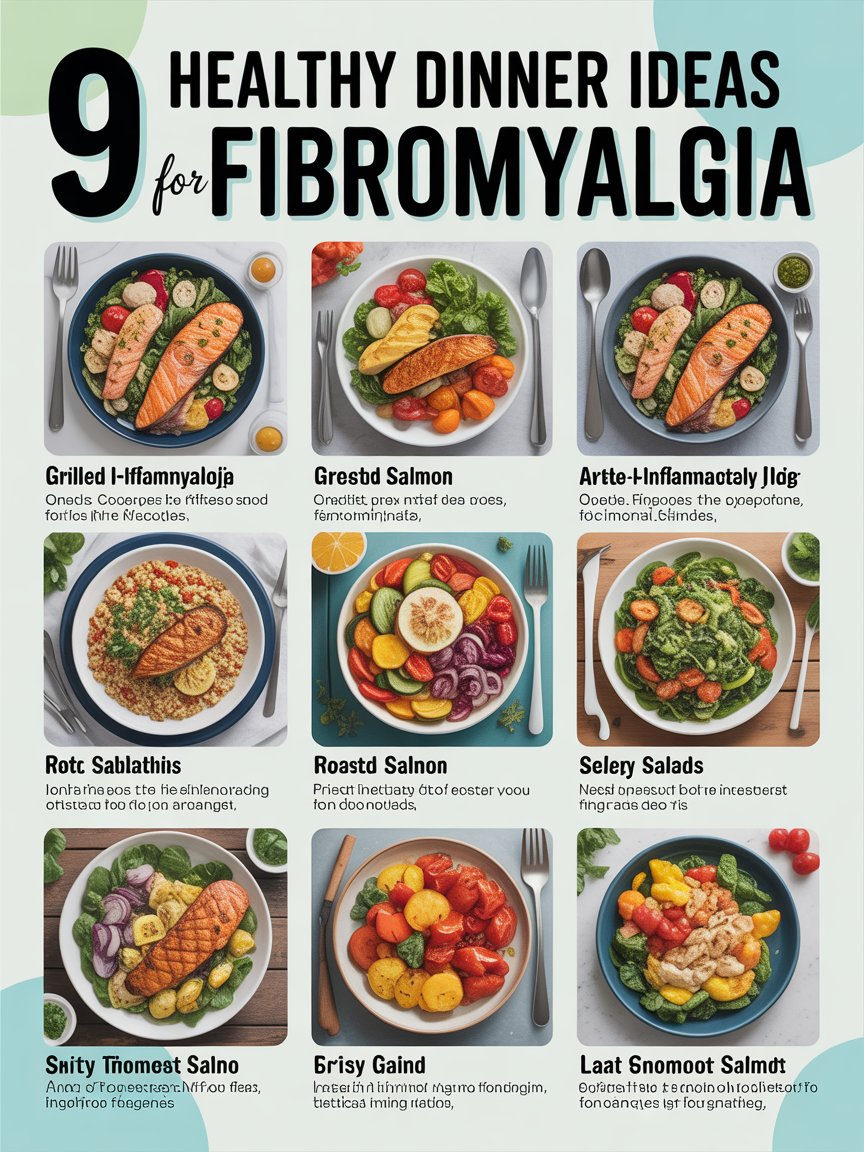
9 Healthy Dinner Ideas for Fibromyalgia
Living with fibromyalgia means managing chronic pain, fatigue, and inflammation, and diet can play a crucial role. Choosing the right meals can help reduce inflammation, boost energy, and support overall wellness. Here are nine healthy dinner ideas designed specifically for people with fibromyalgia, along with tips to make your evening meals both nourishing and enjoyable.
1. Baked Salmon with Quinoa and Steamed Vegetables
Salmon is rich in omega-3 fatty acids, which can help reduce inflammation and support joint health. Pair it with quinoa, a high-protein whole grain, and lightly steamed vegetables like broccoli, carrots, and zucchini. This combination offers a nutrient-dense meal that is gentle on the digestive system and easy to prepare.
Tip: Use fresh herbs like dill or parsley and a squeeze of lemon for flavor instead of heavy sauces, which can trigger inflammation.
2. Lentil and Vegetable Soup
Lentils are packed with protein and fiber, supporting sustained energy levels and gut health. Combine lentils with anti-inflammatory vegetables such as spinach, celery, and tomatoes for a comforting soup.
Tip: Slow-cooking the soup allows flavors to meld and makes the lentils easier to digest, which is ideal for fibromyalgia-related digestive sensitivity.
3. Grilled Chicken with Sweet Potato Mash
Chicken is a lean protein source, while sweet potatoes provide complex carbohydrates and vitamin A, essential for immune support. Grill the chicken with olive oil, garlic, and rosemary for added anti-inflammatory benefits.
Tip: Pair this meal with steamed green beans or a side salad to increase fiber and micronutrient intake.
4. Zucchini Noodles with Pesto and Cherry Tomatoes
For a lighter, low-carb dinner, zucchini noodles topped with a homemade basil pesto and cherry tomatoes can be both satisfying and anti-inflammatory. Pesto made with olive oil and walnuts adds omega-3s, which may help with fibromyalgia pain.
Tip: Avoid store-bought pesto that may contain excess salt or preservatives.
5. Turkey and Vegetable Stir-Fry
Lean turkey is an excellent protein that is easy on the joints and muscles. Stir-fry with anti-inflammatory vegetables like bell peppers, broccoli, and carrots using olive or avocado oil for healthy fats.
Tip: Keep the seasoning simple with garlic, ginger, and turmeric to boost flavor and reduce inflammation.
6. Baked Cod with Roasted Brussels Sprouts
Cod is a low-fat, high-protein fish that pairs perfectly with roasted Brussels sprouts, which are high in fiber and antioxidants. This meal is ideal for easing digestion and supporting overall nutrient intake.
Tip: Roast vegetables at a moderate temperature to preserve nutrients while enhancing flavor.
7. Chickpea and Spinach Curry
A plant-based option, chickpeas are high in fiber and protein. Combine them with spinach, garlic, turmeric, and ginger for a warming, anti-inflammatory curry. Serve with brown rice or cauliflower rice for a complete meal.
Tip: Using coconut milk in moderation can add creaminess without heavy saturated fats.
8. Quinoa-Stuffed Bell Peppers
Bell peppers are packed with vitamin C and antioxidants. Fill them with a mixture of quinoa, black beans, and diced vegetables for a colorful, nutrient-rich meal that supports energy and reduces inflammation.
Tip: Bake the stuffed peppers until tender and top with a small amount of avocado for healthy fats.
9. Vegetable and Tofu Skewers
Tofu is a great plant-based protein that can support muscle repair and reduce inflammation. Marinate cubes of tofu with olive oil, lemon juice, and herbs, then skewer with vegetables like zucchini, mushrooms, and cherry tomatoes. Grill or bake until golden.
Tip: Serve with a side of quinoa or brown rice to make a balanced, fiber-rich dinner.
Making Dinner More Fibromyalgia-Friendly
Choosing anti-inflammatory ingredients, avoiding processed foods, and controlling portion sizes are key strategies. Incorporate herbs like turmeric, ginger, and garlic, and focus on whole foods that provide steady energy without triggering pain or fatigue.
Easy Meal Prep Tips
Batch-cooking proteins like chicken, fish, or lentils at the start of the week can save energy on busy days. Pre-chopped vegetables and frozen greens can also make dinner preparation easier, which is especially helpful on days with high fibromyalgia fatigue.
Hydration Matters
Pair dinners with water or herbal teas instead of sugary drinks. Adequate hydration supports muscle function, reduces fatigue, and helps with joint stiffness.
Mindful Eating
Eat slowly and focus on your meal to improve digestion and reduce bloating. Mindful eating can also help you recognize foods that trigger flare-ups or discomfort, allowing you to adjust your diet accordingly.
Balancing Nutrients
Aim for a balance of lean protein, healthy fats, and complex carbohydrates in every dinner. This approach can help stabilize energy levels, improve sleep quality, and support overall fibromyalgia management.
Variety Is Key
Rotating these nine dinner ideas throughout the week ensures a diverse nutrient intake and prevents boredom. Eating a wide range of colorful vegetables, proteins, and whole grains helps your body receive the vitamins and minerals it needs to combat inflammation and fatigue.

Leave a Reply