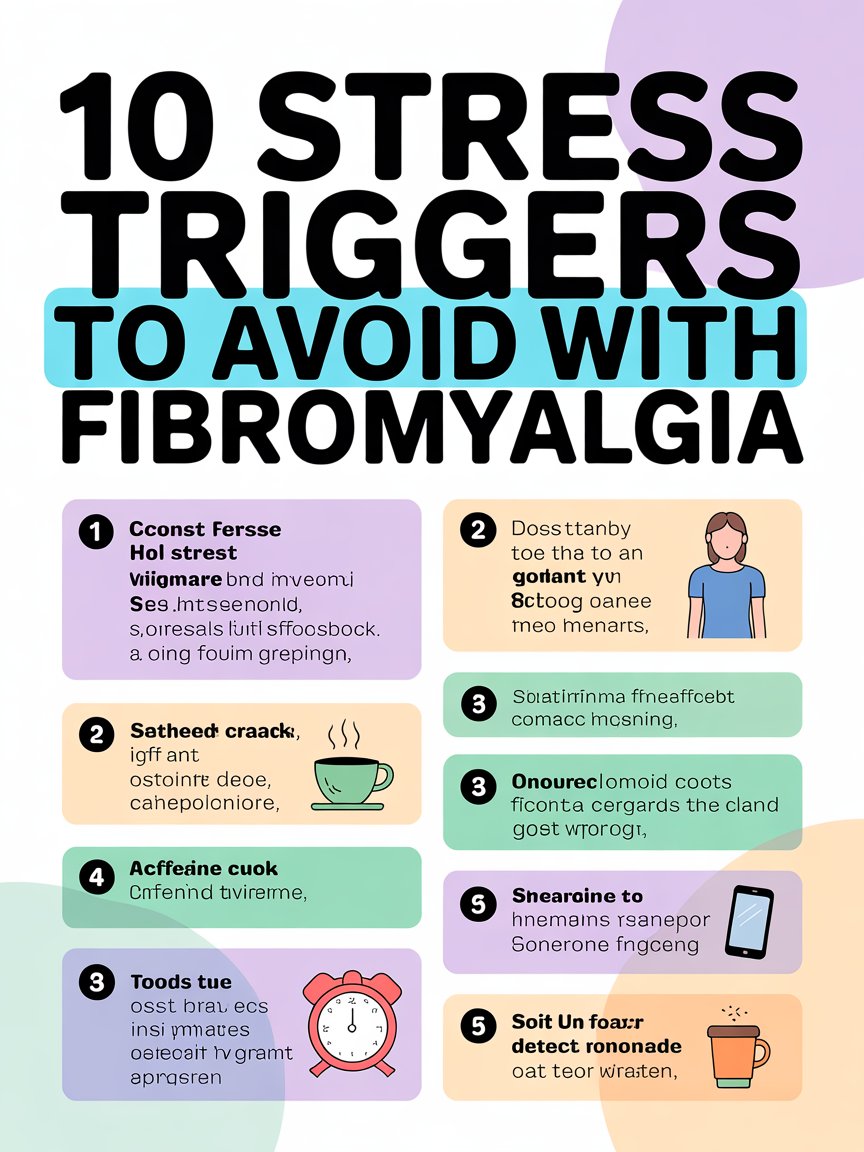
10 Stress Triggers to Avoid with Fibromyalgia
Fibromyalgia is highly sensitive to stress, and even small triggers can lead to flare-ups, increased pain, fatigue, and sleep problems. Understanding what causes stress in your daily life is an important step toward better symptom management.
By identifying and avoiding common stress triggers, you can reduce flare-ups and maintain better control over your condition. Below are ten stress triggers to watch out for and avoid when possible.
1. Overexertion
Doing Too Much at Once
Pushing your body beyond its limits can quickly lead to fatigue and pain.
Increase in Flare-Ups
Overactivity often results in worsened symptoms the next day.
2. Poor Sleep Habits
Irregular Sleep Schedule
Inconsistent sleep patterns can disrupt your body’s rhythm.
Increased Fatigue
Lack of quality sleep can intensify pain and stress levels.
3. Emotional Stress
Anxiety and Worry
Constant worrying can strain your nervous system.
Mood Changes
Emotional stress can increase pain sensitivity.
4. Lack of Routine
Unpredictable Days
A chaotic schedule can increase stress and fatigue.
Reduced Control
Having no structure may make symptoms harder to manage.
5. Negative Thinking Patterns
Self-Criticism
Negative thoughts can increase emotional stress.
Worsened Symptoms
Mental strain often leads to physical discomfort.
6. Noise and Sensory Overload
Too Much Stimulation
Loud environments or bright lights can be overwhelming.
Increased Fatigue
Sensory overload may trigger headaches and pain.
7. Poor Diet Choices
Processed and Sugary Foods
Unhealthy foods can contribute to inflammation.
Energy Crashes
These foods may worsen fatigue and mood swings.
8. Caffeine Overuse
Disrupted Sleep
Too much caffeine can interfere with rest.
Increased Anxiety
It may heighten stress and nervousness.
9. Lack of Physical Activity
Increased Stiffness
Too little movement can worsen pain and tension.
Lower Energy Levels
Inactivity can lead to fatigue and reduced stamina.
10. Ignoring Your Body’s Signals
Pushing Through Pain
Not resting when needed can worsen symptoms.
Delayed Recovery
Ignoring warning signs often leads to stronger flare-ups.
Conclusion
Avoiding stress triggers is a key part of managing fibromyalgia. By recognizing factors like overexertion, poor sleep, emotional stress, and unhealthy habits, you can reduce flare-ups and improve your daily comfort.
Listening to your body and making mindful adjustments can help you stay balanced and in control. Over time, these changes can lead to better symptom management and a more stable, healthier lifestyle.

Leave a Reply