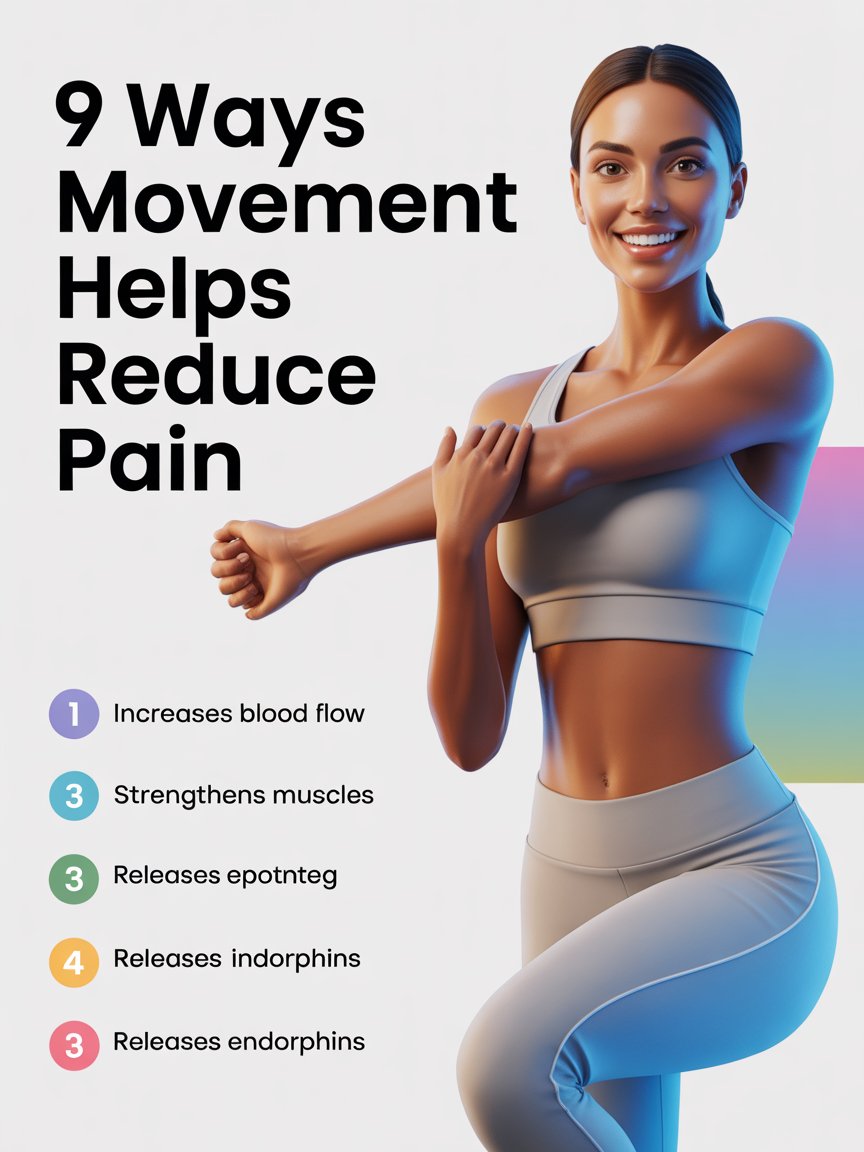
9 Ways Movement Helps Reduce Pain
Introduction
Living with Chronic Pain can make it tempting to avoid activity. However, gentle and consistent movement is one of the most effective ways to reduce discomfort and improve daily function. Even small amounts of physical activity can create meaningful changes in how your body feels and responds to pain.
Why Movement Matters
The body is designed to move. When you stay active, you support circulation, muscle health, and joint function. For individuals dealing with chronic pain, movement can break the cycle of stiffness, tension, and discomfort.
1. Increases Blood Flow
Movement improves circulation, allowing oxygen and nutrients to reach muscles and tissues. This helps reduce inflammation and supports the body’s natural healing processes.
2. Reduces Muscle Stiffness
Gentle activity keeps muscles flexible and prevents them from becoming tight. This makes everyday movements smoother and less painful.
3. Releases Natural Painkillers
Physical activity stimulates the release of endorphins—chemicals in the brain that act as natural pain relievers. These also help improve mood and reduce stress.
4. Improves Joint Mobility
Regular movement keeps joints lubricated and flexible. This reduces stiffness and helps maintain a healthy range of motion.
5. Strengthens Supporting Muscles
Stronger muscles provide better support for joints and the spine. This reduces strain on the body and helps prevent further pain or injury.
6. Breaks the Pain Cycle
Avoiding movement can lead to more stiffness and weakness, which increases pain. Gentle activity interrupts this cycle and helps restore normal function.
7. Reduces Stress and Tension
Stress often makes pain feel worse. Movement, especially relaxing activities like walking or stretching, helps calm the nervous system and release built-up tension.
8. Improves Sleep Quality
Regular physical activity can help regulate sleep patterns. Better sleep allows the body to recover and can reduce pain sensitivity over time.
9. Boosts Confidence and Independence
Staying active helps you feel more in control of your body. This can improve confidence, making it easier to manage daily tasks and maintain independence.
Tips for Getting Started
Start small and choose activities that feel comfortable, such as walking, stretching, or gentle yoga. Gradually increase your activity level as your body adapts. Always listen to your body and avoid pushing into pain.
Building a Sustainable Routine
Consistency is key. Aim for short, regular sessions rather than long, intense workouts. Even 10–15 minutes of movement each day can provide lasting benefits.
When to Take It Slow
On days when pain is more intense, reduce the duration or intensity of your activity. Light stretching or simple movements can still help without overexertion.
Long-Term Benefits
Over time, regular movement can reduce pain intensity, improve flexibility, and enhance overall quality of life. It also supports both physical and mental well-being.

Leave a Reply